France says no to Tesla FSD (Politics)
France says no to Tesla FSD (for now)
Update September 2nd, 2026
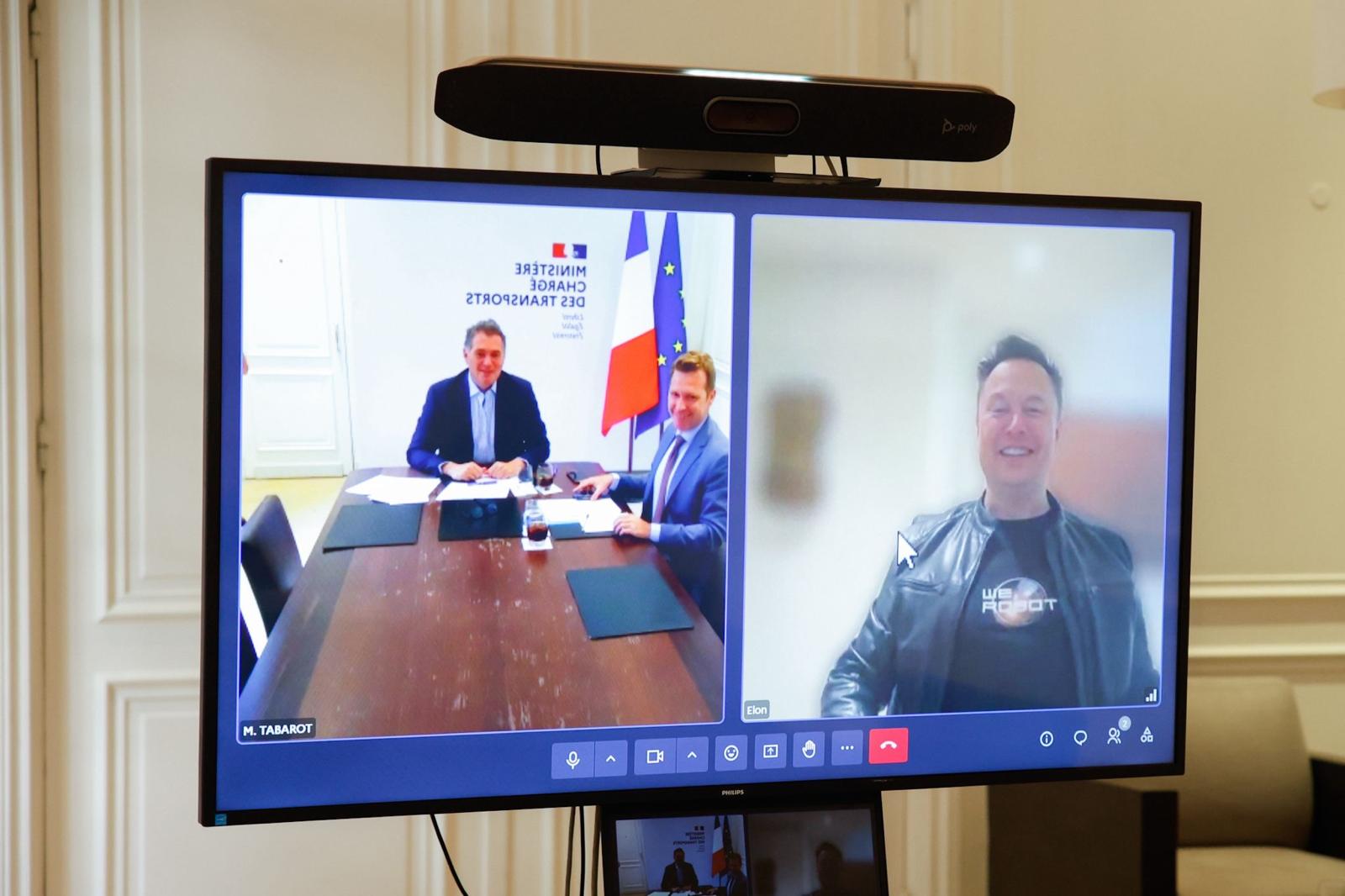
BREAKING NEWS: Philippe Tabarot held a virtual meeting with Elon Musk.
French authorities have worked with Tesla for months on technical changes needed for vehicle approval. European-level homologation is expected soon, and road tests are now starting with two FSD-equipped vehicles. The post highlights ongoing European efforts to integrate advanced autonomous driving tech, underscored by Musk’s ❤️🇫🇷 reply.
Original Article
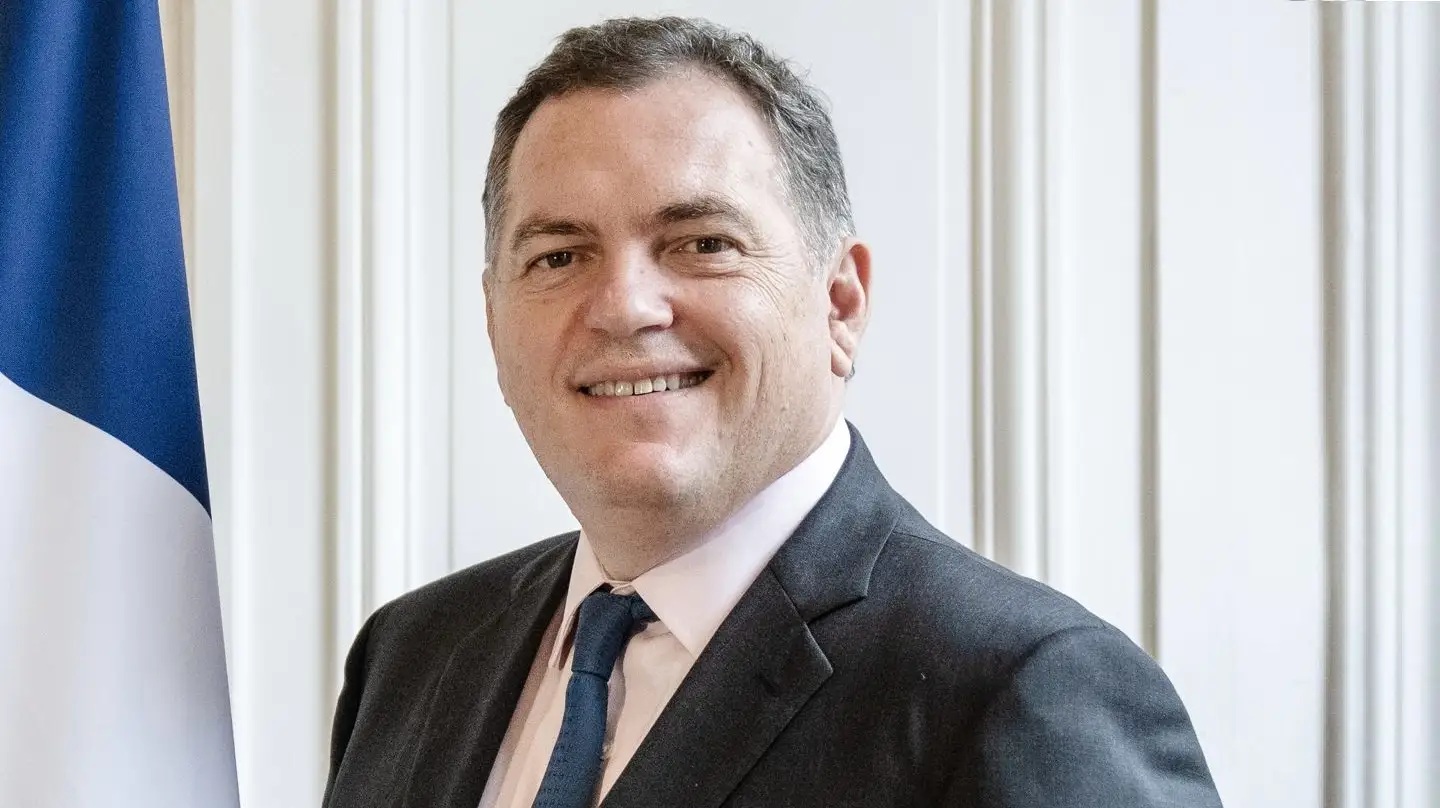
On July 22, 2026, the French Minister of Transport, Philippe Tabarot, answered a citizen’s question on the French government’s participation platform Agora. The answer, in short: No. Tesla FSD (Supervised) will not be authorized in France. Not yet.
You can watch the video with the minister’s answer on the Agora platform, and the decision was covered widely in the French press, for example by Le Figaro and Numerama. The Danish motoring organization FDM writes Tesla-ejere i Danmark får lov at slippe rattet, and the official website of Færdselsstyrelsen announces Teslas førerassistentsystem FSD Supervised er foreløbigt godkendt i Danmark.
I live in Denmark, and here FSD (Supervised) was provisionally approved on June 9, 2026 by the Danish Road Traffic Authority, Færdselsstyrelsen. The Netherlands was first, on April 10, 2026, when the Dutch vehicle authority RDW granted a European type approval with provisional validity limited to the Netherlands, after more than one and a half years of testing. Lithuania, Estonia, and Belgium followed.
The minister’s answer reveals a lot, and that is what this article investigates.
The question from Ludovic
Supervised autonomous driving, approved in the Netherlands, could help save lives by limiting human error. Is France considering authorizing it soon?
The full transcript of the minister’s answer, translated into English, is at the end of this article. Read it. It is worth your time.
Intro: I bought FSD in 2019
In 2019, I bought a Tesla Model 3 and added the FSD option. I have been waiting for seven years!
What does it mean to me?
Driving from Denmark to France
I never thought of letting the car drive in the city. My interest was letting it drive the 1.200 km on the highway from Denmark to France. That would have been really useful.
If FSD cannot cross the borders into Sweden, Germany, the Netherlands, Belgium, and France, then it is just a gadget.
People who are blind or have low vision
My son was slowly losing his vision at that time, and I told him that by the time he turned 18 in 2026, they would have solved the challenge and that one day, he would be able to own a car. Little did I expect that public administration would get in the way of the technology.
Safety
In 1987, my mother was killed in her car when a truck driver lost control of his vehicle. To me, it is personal, and I have no problem with all trucks becoming autonomous.
Electric Car
I have driven almost 200.000 km in my Tesla Model 3. Assuming a comparable gasoline car consuming 5 liters per 100 km, that corresponds to roughly 10.000 liters of gasoline that would have had to be pumped out of the ground, refined, and transported to a gas station. Burning that gasoline would have produced about 23 metric tons of CO2 in tailpipe emissions alone. The comparison covers tailpipe emissions only and does not include the emissions from producing the electricity I charged with.
Everyone else is late to the party
Tesla
Tesla has been talking about self-driving cars since 2016. All of their models, including the cheapest Model 3, have been equipped with cameras and an onboard computer intended for self-driving since 2017, though the hardware has been upgraded several times since then.
On the Tesla AI Day 2021, they shared progress, data, problems, and information.
Tesla does not publish a cumulative figure for its FSD investment, but my estimate is that the company has spent more than $14 billion on AI infrastructure, research, and development over the past 10 years. Not all of that is FSD-specific, but the order of magnitude is clear.
The European Union
Now that Tesla is actually rolling out FSD Supervised on public roads, Europe is reacting, or should I say panicking.
The good news is that the EU understands that it has to harmonize the rules for all countries. No European car maker will ever succeed in making autonomous vehicles for all the different countries in the world. Especially the small ones. This should also be good news for human drivers and other car makers.
2025-03-05 Industrial Action Plan for the European automotive sector
Get the PDF here.
2026-06-08 Directorate-General for Mobility and Transport
18 Member States signed a Joint Declaration of Intent on large-scale cross-border testbeds for autonomous vehicles.
EU Ministers back cross-border initiative for autonomous vehicle testbeds
Note that as a first supporting measure, the Connecting Europe Facility (CEF) 2026 work programme foresees 20 million euros for digital infrastructure dedicated to autonomous driving under the reflow call to be launched in June this year.
Twenty million euros will not get them far. Tesla, a single company, has had to spend billions of dollars, and even Tesla is not there yet.
Why are we interested in autonomous vehicles?
Autonomous vehicles can save lives
That is the promise, according to Elon Musk on X, and it is the reason Ludovic asked his question in the first place.
Some people cannot or prefer not to drive a car
- People with low vision or other disabilities
- People who have a driver’s license but are not comfortable driving
- People with no driver’s license
Protection of the European car industry
This looks like protectionism to me. France, Germany, and the other car-making countries in Europe have strong industrial reasons to delay Tesla, and I suspect that protecting the European car industry is part of the explanation.
The minister presents this as a pure safety decision. But notice that the countries that approved FSD first, the Netherlands, Lithuania, Estonia, Denmark, and Belgium, have one thing in common: none of them has a major national car brand to protect.
You need data to train AI
The car industry and the minister are overlooking something fundamental about AI: you need data to train it on.
In October 2016, almost ten years ago, Tesla announced that every car leaving the factory would be equipped with eight cameras and the hardware for full self-driving. Tesla has been collecting real-world driving data ever since. Its camera-equipped fleet has driven billions of kilometers, and Tesla can select and upload the real-world driving clips that are useful for training. It does not need to transmit every kilometer to learn from the fleet.
European car makers also collect driving data. But none of them combines Tesla’s fleet scale, standardized hardware, and nearly a decade of continuous deployment. Without comparable data, I do not see how they will catch up.
In the video, the minister reminds us that France has some of the best engineers in the world. That is true.
But this is not a traditional engineering problem. You cannot specify, design, and engineer your way to autonomous driving.
Without data, there is no AI. And you cannot buy ten years of driving data. You have to collect it.
This only concerns a few cars anyway
The current European rollout only concerns the newer Tesla models with Hardware 4. And the customer has to pay a subscription of 99 euros per month to activate FSD.
That will further limit the number of users actually activating FSD in France. We are not talking about millions of cars suddenly driving themselves. We are talking about a small, careful, and paying group of early adopters.
The driver is responsible
This is important, and the minister actually says it himself: FSD (Supervised) is a driver assistance system, not an autonomous driving system.
The driver has to be in the driver’s seat, pay attention, and be ready to intervene at any moment. The driver remains fully responsible, including legally, even when FSD is activated.
So the safety net the minister is asking for is already there. It is the driver.
Once approved, the customers will move
In the Q2 2026 earnings call, held the very same day as the minister’s video, Elon Musk said:
We’re seeing in locations that have FSD approved, we’re seeing a very high take rate of FSD. In fact, I think for a lot of people, they’re actually buying Tesla Full Self-Driving with a car attached, as opposed to a car with FSD.
Customers are walking into the stores asking for Full Self-Driving, with whatever car it comes with. About 55% of North American deliveries in Q2 had an FSD subscription enabled at the time of delivery.
This supports the point. Once FSD is approved in Europe, the rest of the car industry will lose even more customers to Tesla. The French car industry knows it. The German car industry knows it. And I suspect the minister knows it too.
Delaying the approval does not change this. It only delays the moment the European car industry has to face it.
The minister’s answer (full transcript in English)
Here is the full transcript of Philippe Tabarot’s video answer, translated into US English with my comments.
Hello everyone, I am very happy to answer today a question that has attracted a lot of interest: Ludovic’s question about Tesla’s FSD driver assistance system.
So that everyone understands what this is about: this system is a driver assistance system developed by Tesla for its vehicles. It is a very advanced driver assistance system whose goal is to drive in all environments, executing all maneuvers automatically and driving hands-free. Until now, these driver assistance systems were mostly oriented toward highways, and in general, at least one hand must remain on the steering wheel. So this is a significant change.
At least Tesla is getting the credit that their system is very advanced. Well, they spent billions of dollars over 10 years on a bold prediction.
The Netherlands has decided to depart from the international and European regulatory framework and authorize its use on their territory.
Unbelievable. Mr. Tabarot is criticizing the Netherlands for moving forward. For reference, see the RDW explanation of European type approval Tesla with provisional validity in the Netherlands.
In France, we consider that this system brings a certain number of technological advances, but that the trade-offs in terms of safety are not yet sufficient for an authorization as it stands. Especially since this system is not an autonomous driving system: the driver remains responsible for driving the vehicle at all times, including when FSD is activated.
This is strange and in contradiction to the RDW: “Safety is RDW’s top priority.” and “We have thoroughly examined and verified this system for more than one and a half years.”
Moreover, several other European countries share these reservations about the system’s level of safety. Our position is therefore not isolated.
Why is it necessary to emphasize that France is not alone? This is completely irrelevant.
So what are these concerns? Without going into overly technical details, there are several. First example: we have found that the system allows speeding. If it notices that the vehicles around it are driving faster, in plain terms, it can drive at 70 km/h instead of 50 if traffic is moving at that speed, and this without any explicit request from the driver. In some cases, a vehicle can thus go up to 50% above the authorized speed limit. The rules of the road are therefore not respected.
I find this argument absurd, and much of the reaction on social media has been the same. The system acts human-like, drives like anyone else would, yet you argue that FSD should “police” the other drivers. Nonsense. It makes no sense to make such requirements.
Another example: according to the data we have, the system does not guarantee an optimal level of driver attention in the city and during the most complex maneuvers, such as lane changes, crossing intersections, or roundabouts. Yet a lack of attention can have very serious consequences, both for people outside the vehicle and for its occupants. And let me remind you: even when the driver assistance system is activated, the driver remains criminally liable in the event of an accident.
We are talking about FSD Supervised. The whole point is that the driver is responsible and present.
Philippe Tabarot says no to Tesla FSD on safety grounds, while he has earlier acknowledged that drug use is a growing problem among drivers in France.
To understand this, I invite you to read a post from Philippe Tabarot on LinkedIn one year ago.
Exactly three months ago today, 15-year-old Joana lost her life in Châteaudun in a school bus accident.
The driver’s positive cannabis test revealed an unacceptable reality: drug use, a scourge in our society, can also affect those responsible for transporting our country’s primary school pupils and middle and high school students.
This is unacceptable for families who place their children, in complete trust, in the care of school transport professionals.
Would you rather put your kid in a French school bus or in an autonomous Tesla?
By the end of August 2025, nearly 30.000 school bus drivers had been checked.
- 119 tested positive for drugs;
- 63 tested positive for alcohol;
- 337 other offenses were reported.
These people are driving your kids to school! These are not average drivers.
So what are the next steps? We are currently continuing our technical discussions with the Netherlands, the other European states, and Tesla to refine our analysis. Last week, a representative of the Ministry of Transport actually traveled to the Netherlands.
Wow. One person went to the Netherlands. I am not impressed.
I want to emphasize this: France supports these technologies, and their deployment must take place within a framework of trust that makes it possible to evaluate the systems and determine the adjustments to FSD needed to guarantee a high level of safety.
I am sure they do.
Ludovic, I hope these explanations help you better understand the ongoing debates. At a time when the number of road accidents is rising again, my responsibility is to enable innovation without ever compromising on safety. Driver assistance systems as advanced as Tesla’s are new because they are designed to operate in all driving environments, including in the city, where situations are particularly complex. It is therefore normal that we take the time to evaluate them properly, to protect the driver as well as all road users.
I think there are some important observations here:
- How many Teslas with FSD activated would actually be driving around in France? Tesla is a fairly expensive car in France, and paying 99 € per month for the feature will definitely hold some back. Also remember that only the newer cars with Hardware 4 can activate the option.
- We can conclude that only fairly rich people with newer cars will actually buy it, and eventually use it some of the time.
- So how high is the actual risk that Tesla FSD causes an accident compared with all the accidents happening in France?
See last section.
France has always supported the deployment of new driver assistance technologies. We have already granted exemptions in the past for this type of system when it met the safety requirements. This is the case, for example, with Ford and, recently, BMW. And we must look even further ahead: the goal is to move from driver assistance to autonomous driving. In France, more than 200 autonomous vehicle experiments have been carried out since 2015. That is a solid foundation, but I want to go further and enable the arrival of type-approved autonomous vehicles in France as early as 2027.
So we have to wait until next year.
It is in this spirit that France, together with Germany, Luxembourg, and 15 other countries, has launched the European test site initiative for autonomous vehicles. The goal is to harmonize the rules between countries and enable their large-scale deployment across Europe in complete safety.
This is great news. Actually, the only thing to be excited about.
In the fall, I will bring together the French autonomous vehicle ecosystem to present the levers that will accelerate the deployment of this technology and set a course for the coming years.
Now this is interesting. He is delaying Tesla FSD until next year and gathering the French auto industry in the fall. I will be looking forward to seeing what comes out of this.
In France, we are fortunate to have world-class car manufacturers and automotive suppliers, but also some of the best engineers in the world in the field of artificial intelligence and digital technology. We have a real card to play, and we will be there, but never at the expense of safety on our roads.
And in the end, I believe this is what it is all about: the French automotive industry is behind.
Yes. France has world-class engineering universities and Grandes Écoles. France has engineers and mathematicians. France has Mistral.ai. France might even find some money, and it has electricity.
What FSD is up against: the French driver
The French government publishes an annual report on traffic violations. The Bilan 2024 des infractions au code de la route from the national road safety observatory (ONISR) gives the reader a true picture of what FSD is up against: the human French driver.
In 2024 alone:
- More than 27,6 million traffic violations were recorded.
- Approximately 1,1 million of them were criminal road offenses (délits), an increase of 9,5% from 2023. Of these, 25% concerned driving without insurance, 18% hit-and-run (délit de fuite), and 14% driving without a license or with an invalid license.
- 13,9 million automated speeding notices were issued.
- More than 270.000 automated notices were issued for running red lights or railway-crossing signals.
- 11,7 million license points were withdrawn: 5,7 million for speeding, 1,9 million for failure to respect priority rules, and 1,7 million for using a phone or earphones behind the wheel.
And here is the number that should keep the minister awake at night: only 79% of all French drivers still have all 12 points on their license. Among the presumed perpetrators of fatal accidents, only 49% did.
It gets worse. In 2023, traffic offenses accounted for 42% of all criminal convictions in France, and 58% of those involved driving under the influence of alcohol and/or drugs.
And who are these convicted drivers? The report answers that too. In 2023, 205.536 men and 21.473 women were convicted of traffic offenses. 91% of all convictions concerned men, and 52% concerned men between 18 and 34 years old. Men account for 92,4% of the convictions for driving under the influence of drugs, 91,9% for driving despite a suspended license, and 88,2% for drunk driving. The age profile is just as clear: driving without a license peaks among the 18-24 year olds, driving without insurance and driving despite a suspension peak among the 25-34 year olds, and drunk driving is concentrated among the 25-44 year olds.
FSD has no gender and no age. It does not turn 19 and start showing off.
Now go back and read the minister’s main argument again: FSD might drive 70 km/h in a 50 zone if the surrounding traffic does. The surrounding traffic. The one collecting 13,9 million speeding notices a year.
FSD does not drink. It does not take drugs. It does not text behind the wheel. It does not lose its license. And it does not deliberately flee the scene of an accident. FSD can make errors, but not for the same reasons as human drivers.
This is my answer to the third observation above. The question is not whether FSD is perfect. The question is whether it is better than this.
Conclusion
I want to give the minister, Philippe Tabarot, credit for one thing: he answered a citizen’s question, on camera, with arguments. That is how a democracy should work.
I am also happy that the EU is harmonizing traffic rules. It will benefit everyone.
But EU bureaucracy does not advance technology. It has never invented anything. It makes rules.
As the joke goes:
- America innovates
- China copies
- Europe regulates
The old continent is living up to its reputation once again.